
Where Does a Septic Smell in the House Come From?
A rotten egg smell in your house is usually sewer gas, most often from a dry drain trap, a leak in the sewer line, or a clog or blockage at the septic tank. Pouring a quart of water into drains you rarely use fixes a dry trap; if the smell stays, call a professional.
If you think the smell could be natural gas, leave the house and call 911 or your gas utility from outside.
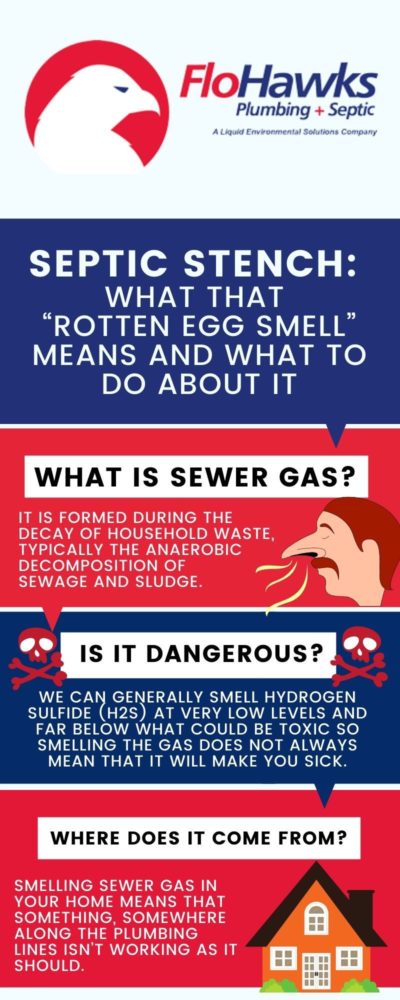
What Is Sewer Gas?
Sewer gas is a complex mixture of toxic and non-toxic gasses that can be present at varying levels depending upon the source. It is formed during the decay of household waste, typically the anaerobic decomposition of sewage and sludge.
Sewer gas is mostly methane, which is odorless, but it’s almost always mixed with other gasses, the most common being hydrogen sulfide (chemically, H2S). Sewer gas can also contain ammonia, carbon dioxide, sulfur dioxide, nitrogen, and, hydrogen. Methane gas can displace oxygen, especially in a confined space, and be deadly.
The hydrogen sulfide gas results from decomposing organic material and can be produced by human and animal wastes. At low levels, it has a strong odor similar to rotten eggs. Under normal conditions, hydrogen sulfide is colorless, flammable gas. Beside the offensive odor, sewer gas can be hazardous, especially over an extended period.
Is It Dangerous?
Fortunately for us, we can generally smell Hydrogen Sulfide (H2S) at very low levels and far below what could be toxic so smelling the gas does not always mean that it will make you sick. However, at higher levels, your nose can become overwhelmed by the gas, and we lose our ability to smell it. At higher levels, H2S gas can make you sick and could be fatal. At the low levels usually noticed in a home, hydrogen sulfide is not likely to cause harm, but sewer gas can be hazardous over time. If the smell is strong, or anyone has a headache or feels dizzy or sick, get fresh air and call a professional.
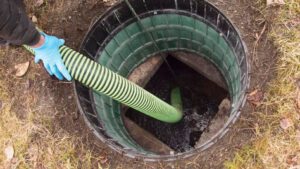
However, if a person were to enter a tunnel, hole, or tank that contained sewage undergoing anaerobic breakdown (such as your septic tank), there is a chance he or she could become poisoned and the impact could be fatal. Never enter your septic tank. This is a job best left to trained professionals. If your tank requires inspection, call FloHawks. We have the proper training, equipment, and expertise to safely get the job done.
For more on the health effects of hydrogen sulfide, see the CDC’s hydrogen sulfide fact sheet.
Where Does It Come From?
Smelling sewer gas in your home means something along your plumbing lines isn’t working as it should. The most common causes are:
- A dry trap. Every drain has a P-shaped trap that holds water and seals out sewer gas. When a sink, shower, tub, floor drain or toilet goes unused for a long time, the water evaporates and gas can come up the drain. The fix is simple: pour a quart or so of water into the unused drains to refill the traps.
- A leak or break in the sewer drain line. A break or leak can let sewer gas seep into a crawl space or basement, and from there into your home. This isn’t a do-it-yourself fix.
- A clog or blockage. Clogged drains or a blockage at the septic tank can cause sewer gas to back up into the building. This also needs a professional.
A dry trap is the only cause you can fix yourself. For the others, FloHawks can help. Our trained and experienced professionals provide inspections, line cleaning, and can repair your system to get it back in working order – without the extra sewer smells. Call FloHawks anytime at 1-800-356-4295 or schedule a time that’s best for you online.